

 Ru
Ru En
En
Construction cradles are suspended work platforms that can be raised and lowered either manually, using rope pulleys and winches, or mechanically, using electric or pneumatic lifting motors. Cradles are also called boats, suspended platforms, swings, motorized or power platforms. Construction cradles can be installed in a fixed position, or they can be moved along the structure on a monorail, this type is sometimes referred to as a moving cradle.
In English, they are called ‘cradles’ or ‘boats’ because of the shipbuilders who often used cradles to build ships. Also, the terminology to describe the parts of the cradle goes back to the working lifting platforms that were suspended by hand on supports and ropes, which all sailors called pulleys and tackle.
One of the oldest existing building companies in England was founded around 1880 by naval captain E. J. Palmer. In an effort to provide quick access to the walls of buildings and structures of all kinds, Palmer pioneered the invention of modern construction cradles. Palmer also designed the first monorail to move the cradle, as well as rotating pulleys that greatly increased the mobility of the construction cradle.
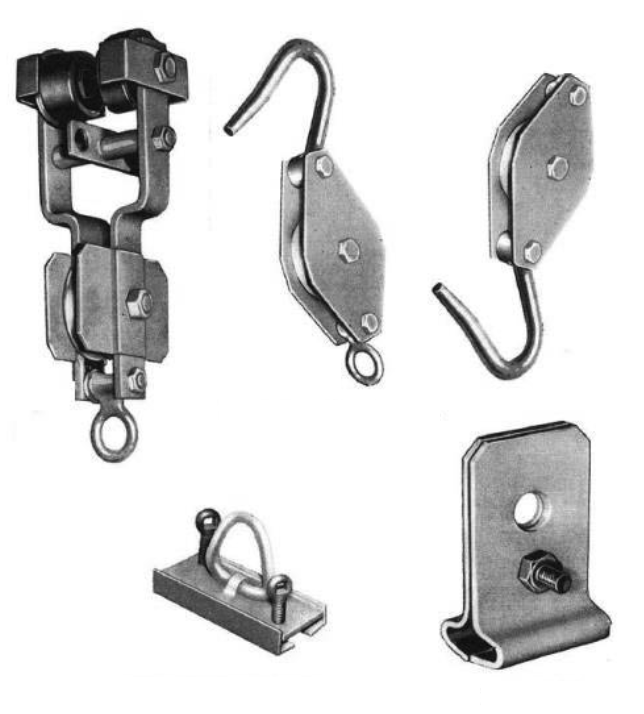
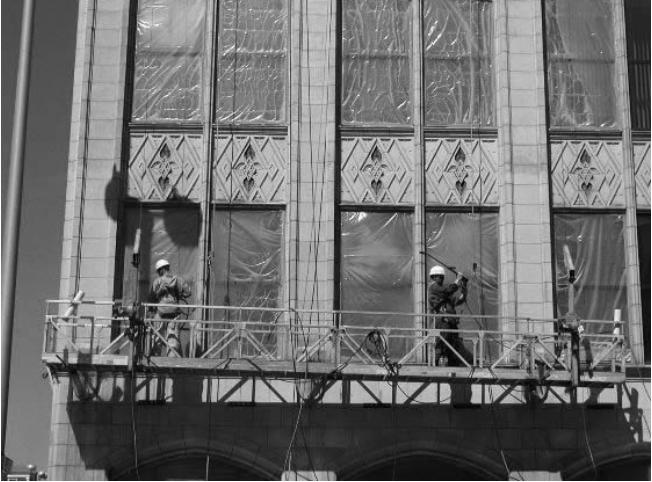
Above ground rigging for suspending the construction cradle is achieved by parapet clamps, moving roof installations, permanently fixed beams, sluices with permanently moving roof, permanently fixed rigging anchors. For some applications, especially on very high structures, the rigging can be installed at intermediate levels of the structure floor and then lifted flush with the scaffolding working surface. When it comes to a suspended rotating system, it may include a modular platform with lifts and roof rigging system that have been designed as one complete system. The figure shows a modern suspended scaffolding system with lifts, outriggers, counterweight modular platforms.
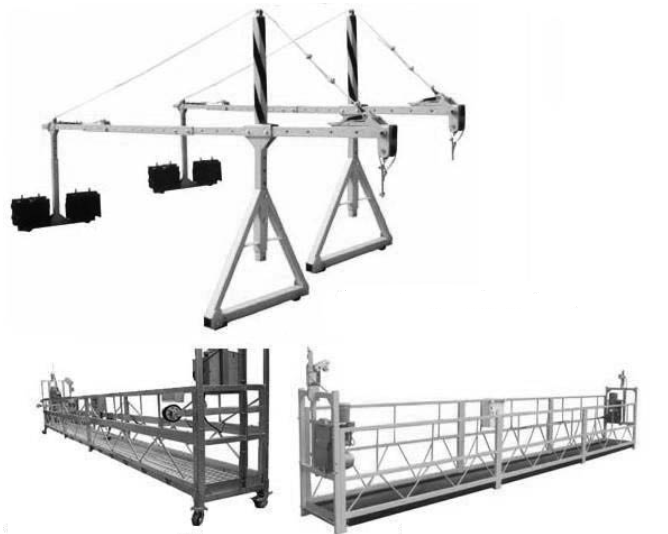
The construction cradle and suspended scaffolding system was improved throughout the 20th century. It is important to mention here that while modern technology is constantly changing the way we work, the old methods are still in use. The renovation of the Big Ben clock in London in 2007 utilized a hand-lifted system that was used over a hundred years ago.
In the early twentieth century, New York City and several other North American cities experienced a boom in high-rise construction. The suspended scaffolding mechanisms shown in the figure are one of the oldest mechanical multipurpose suspended platform systems used for high-rise construction. The suspension system was designed by Patent Scaffoldings specifically for masons in high-rise building projects. This mechanism for the suspended scaffolding system has been awarded a gold medal for its high safety standards in construction.
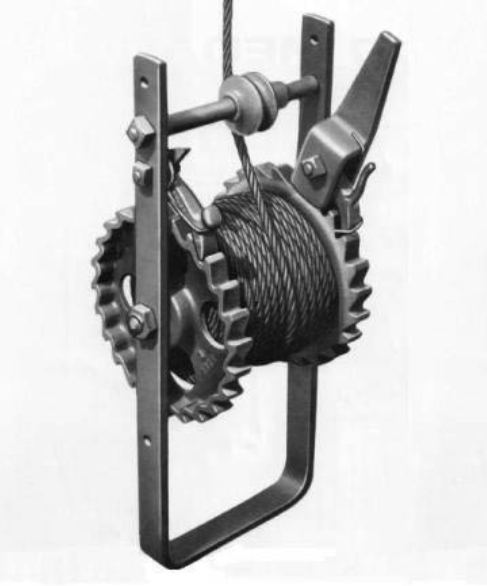
Throughout the 20th century, this type of suspended platform was used on many construction sites of later famous high-rise buildings in the United States, Canada and other countries. The unique hand-wound suspension system has remained quite popular in high-rise building projects. The reliability of the patented lifting mechanism is the result of the superior design of the winch drum and the simple lifting mechanism as shown in the figure. The fact that this type of lifting machine has been used successfully with minimal design changes for over a century speaks for itself.

Our expert will contact you soon