

 Ru
Ru En
En
Today, there is a huge variety of scaffolding, which is used for different types of work in different conditions. Let's take a look at the main types of scaffolding.
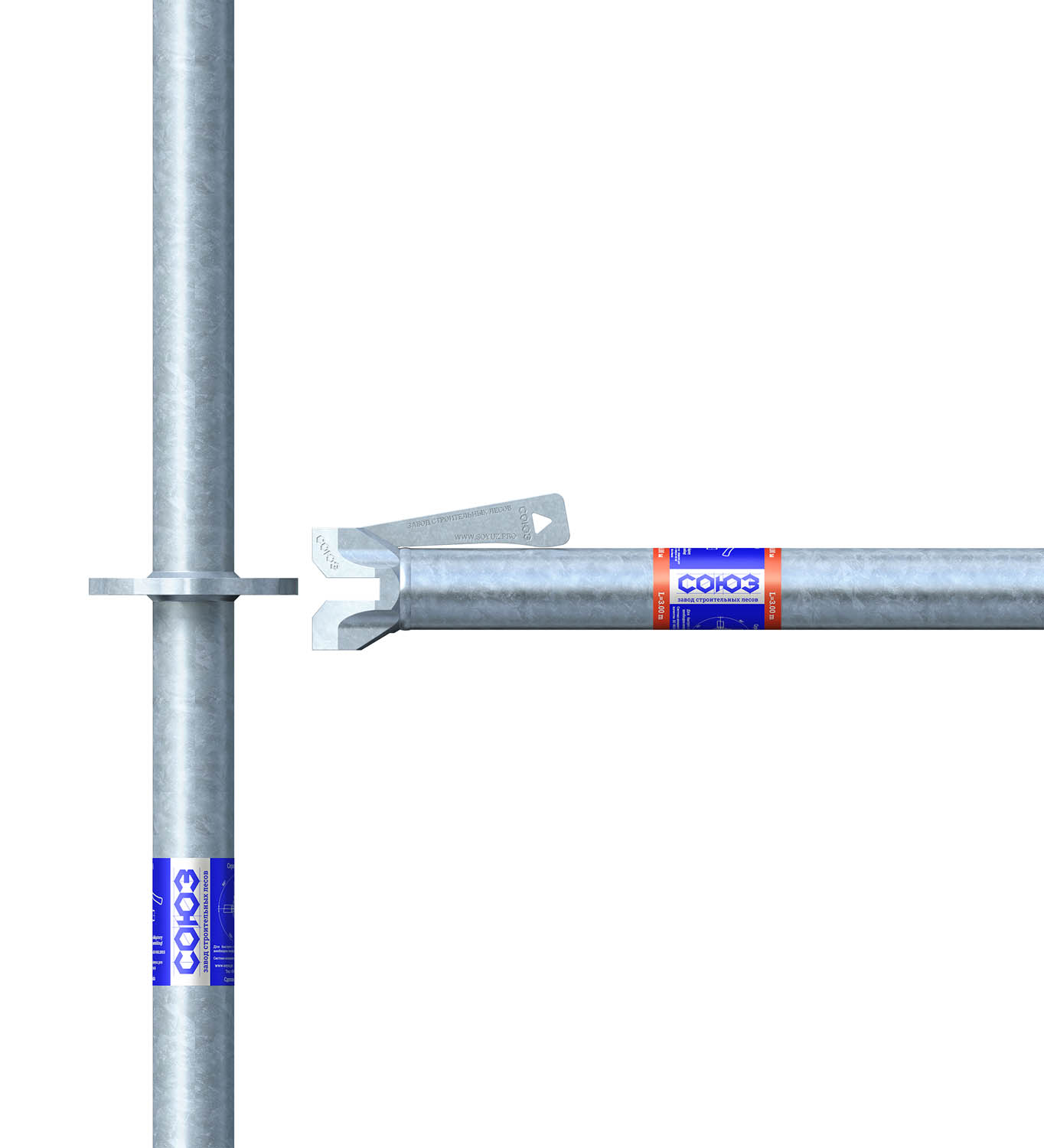
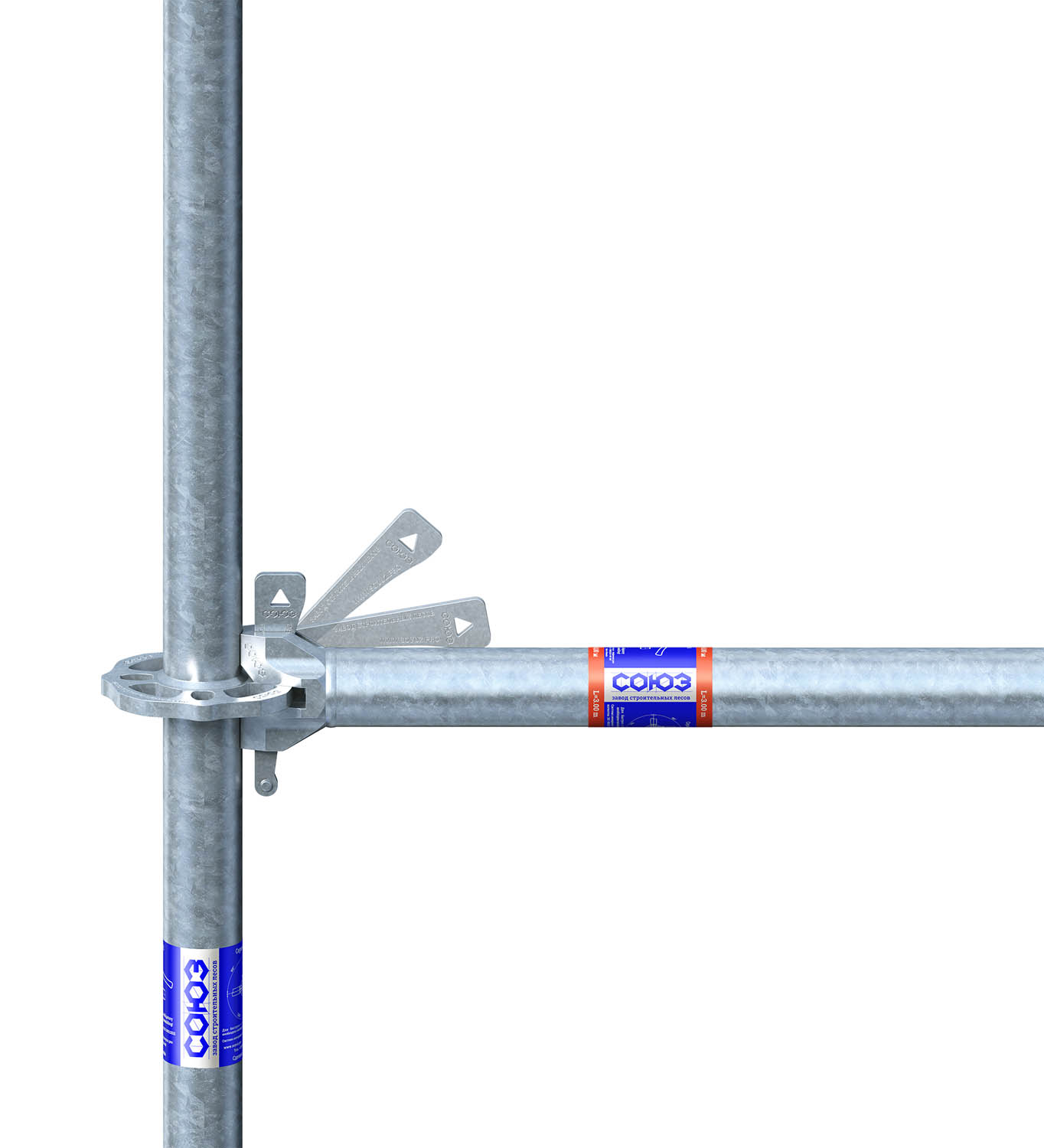
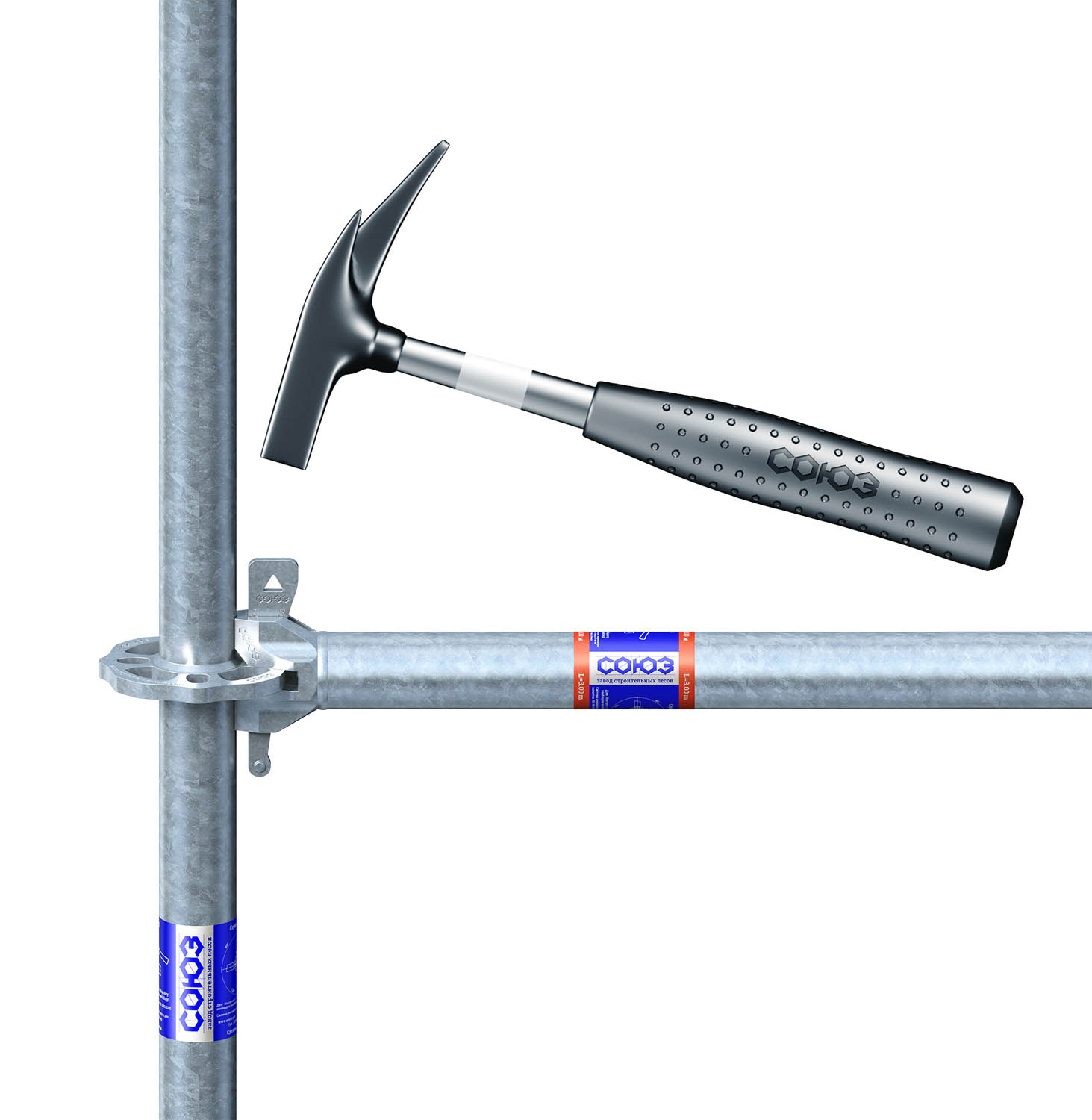
Due to its high load-bearing capacity, this type of scaffolding is widely used for highly complex construction projects. Ringlock scaffolding is a simple modular spatial structure consisting of ledgers, poles, diagonal braces, decking and decking boards. The horizontal and diagonal elements are attached to pole flanges using a ringlock. Each of these elements has a special block (ringlock) with an integrated wedge at the ends. The elements are attached to pole flanges using a ringlock and wedge.
Compared to other types of scaffolding, ringlock scaffolding has one indisputable advantage - the speed of assembly. Assembly can be faster up to 3 times. Ringlock scaffolding is used in industrial and civil construction, aircraft and shipbuilding, as well as in the construction of concert stages and stages for shows. Ringlock scaffolding is also widely used in the operation and turnaround of industrial facilities of various fields (power engineering, petrochemical and oil refining, metallurgy, pulp and paper mills, concrete plants and many other types of industry).
Coupler Scaffolding
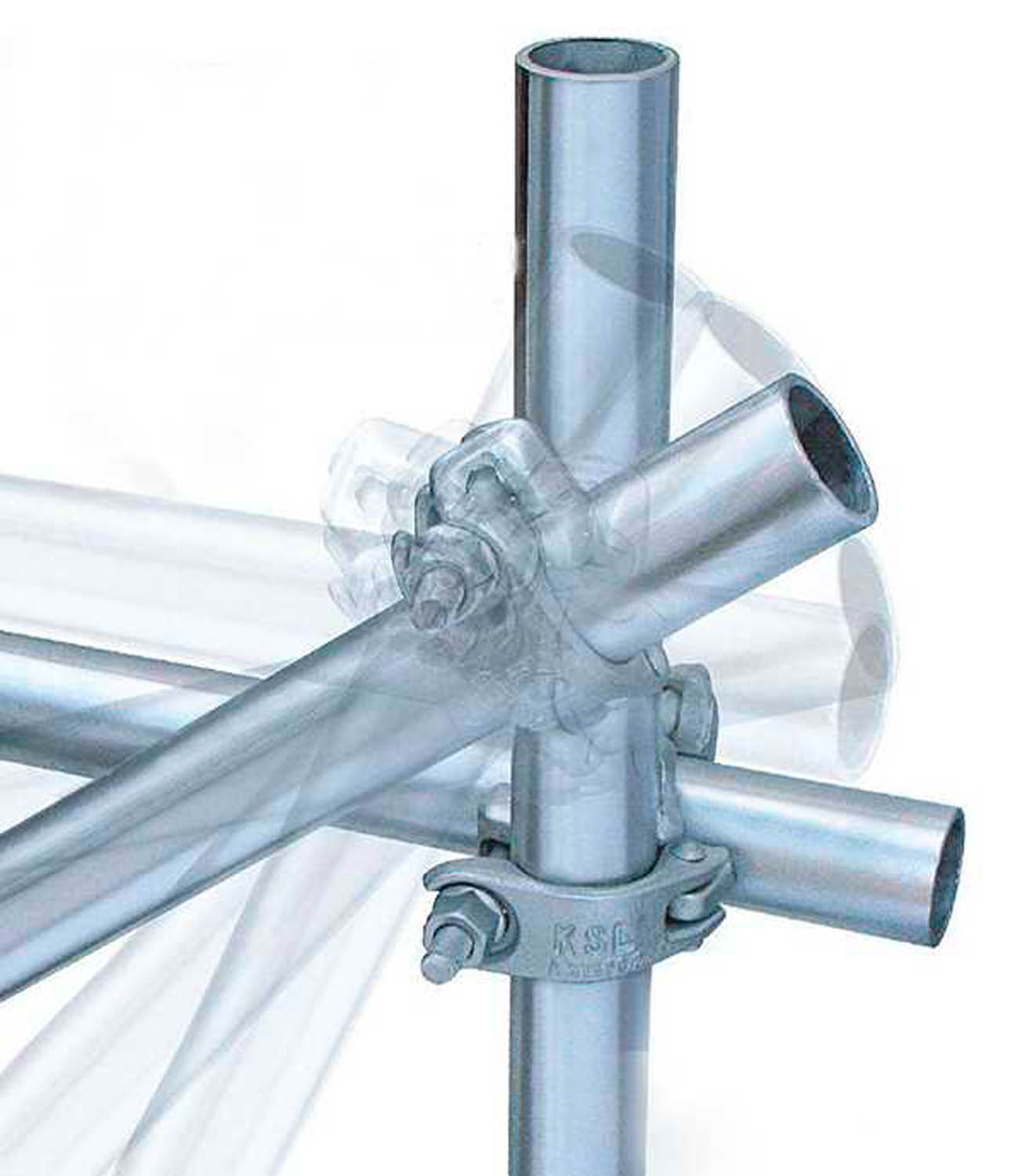
This type of scaffolding can be called one-size-fits-all scaffolding for complex facilities. Coupler scaffolding does not have strict dimensions, so you can set a different pitch of the poles, change the tier height, change the size of the working area. This scaffolding is used for buildings and structures with non-standard configurations. The elements of coupler scaffolding are attached to each other by means of swiveling and fixed couplers. Due to the lack of a ready-made module (fixed size of fastening of elements between each other), each coupler has to be calibrated and fastened with a spanner, which significantly increases the labor intensity during the installation of this type of scaffolding.
Frame Scaffolding
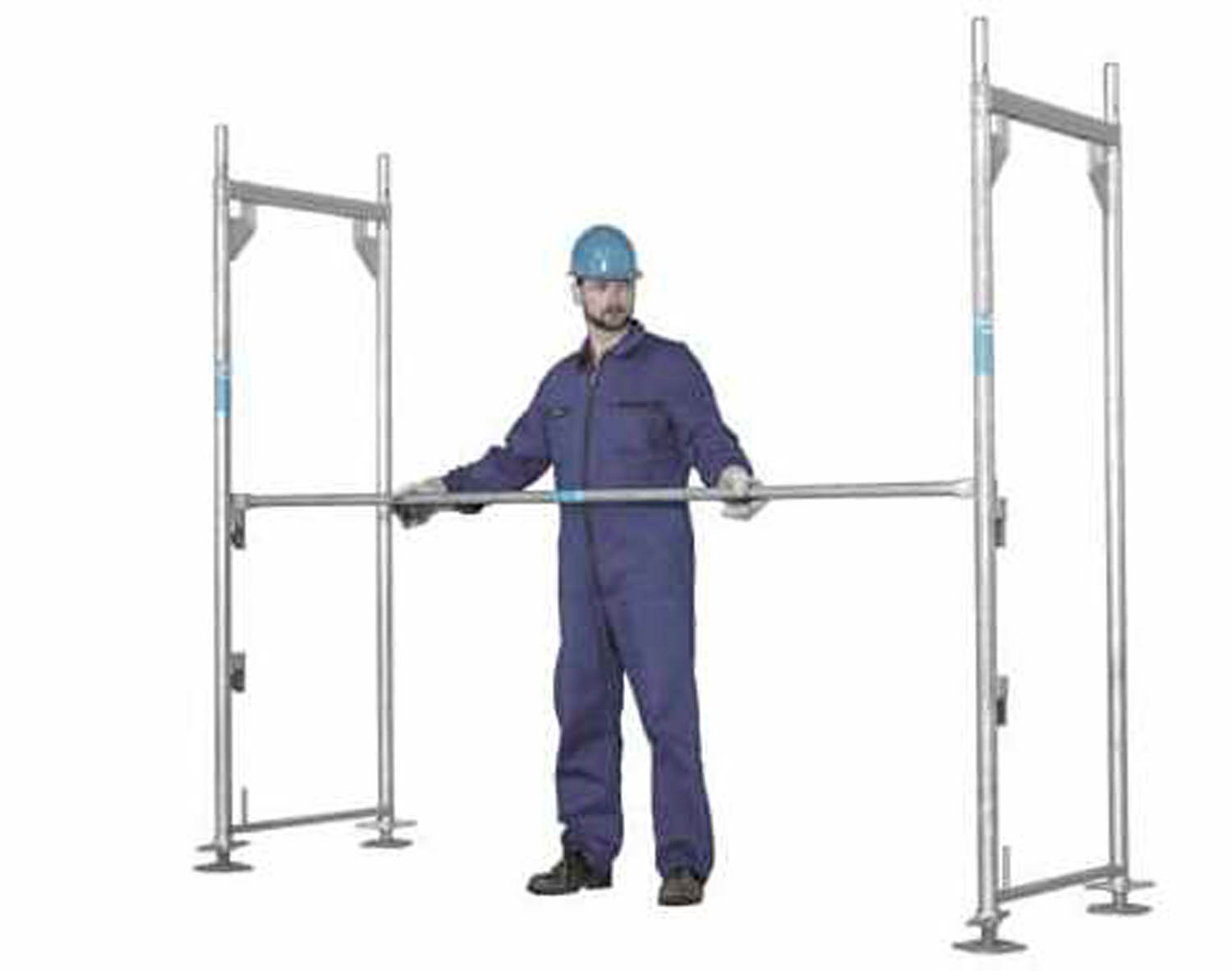
This type of scaffolding is most often used for plastering, masonry and renovation, usually as facade scaffolding. Scaffolding is a metal framework made of frames connected by horizontal and diagonal braces. This type of scaffolding is characterized by its light weight, low price and quick assembly. However, frame scaffolding is difficult to use if the facade of a building or place of work has a complex geometric shape.
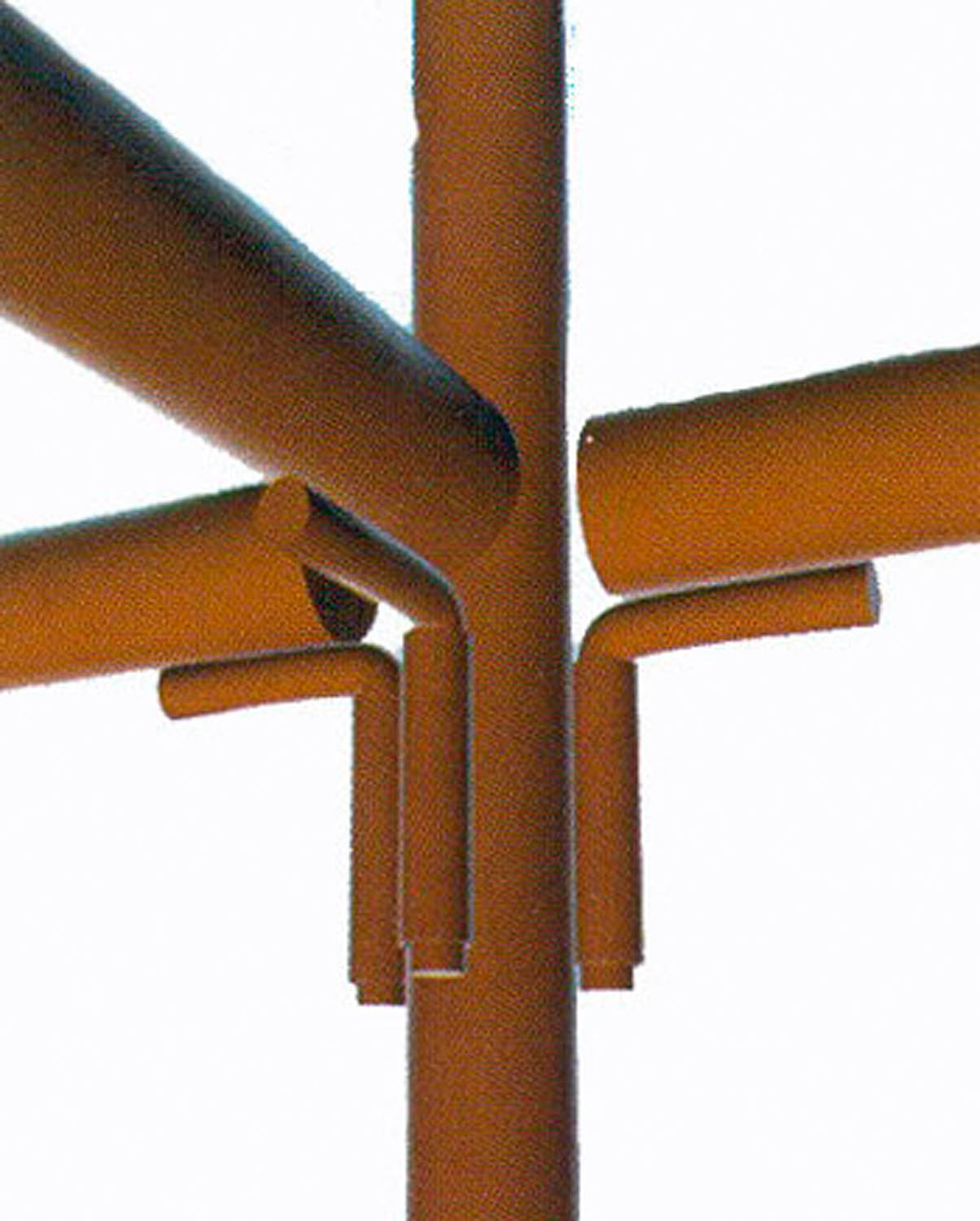
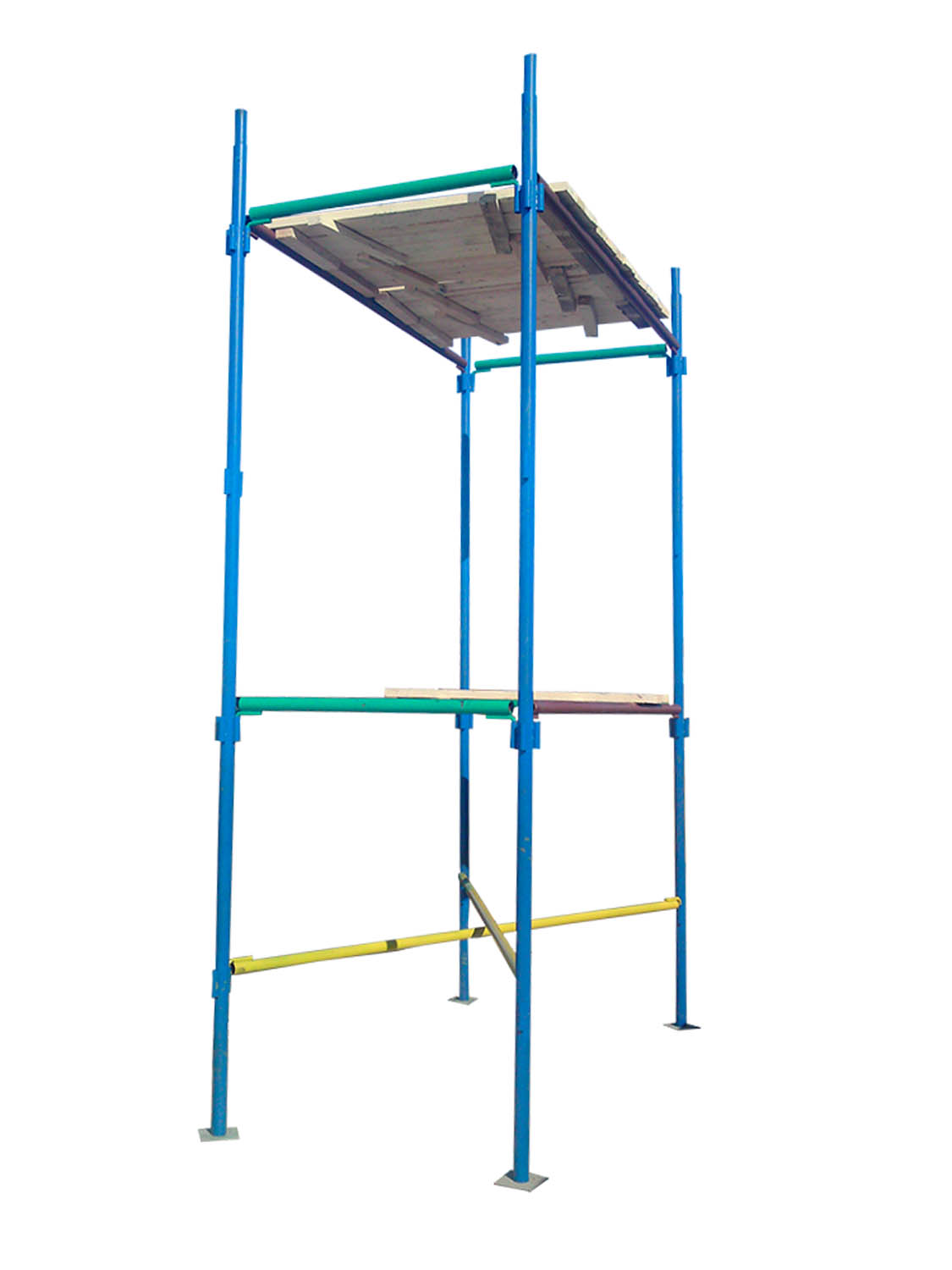
Pin lock scaffolding is also included in the group of modular scaffolding, but as you guessed from the name, the elements are connected to the pole using a pin lock. They have a simple design, but they are considerably heavier than other types of scaffolding and less flexible in use than ringlock scaffolding. Also the pin lock itself is not a secure method of fastening and is subject to large movements from the resulting scaffolding loads. Pin lock scaffolding is well suited for low heights and in confined spaces with simple geometries. For example, compared to ringlock scaffolding, pin lock scaffolding allows fewer horizontal elements to be attached to the node pole, and it is difficult to install diagonal braces on pin lock scaffolding.
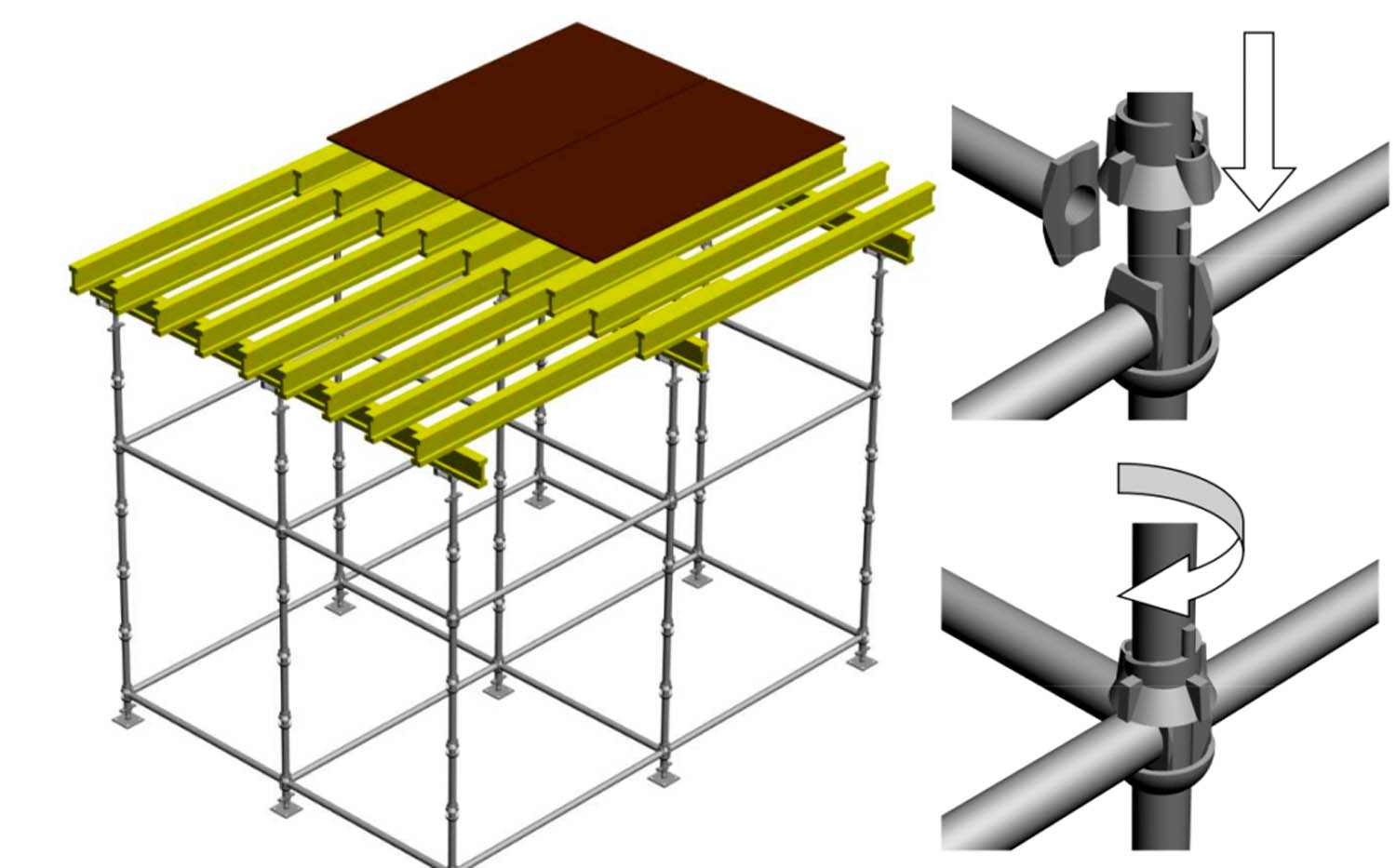
This type of scaffolding is named after the method of attachment - special locks (cups) that connect the poles to horizontal ledgers. This method of attachment ensures high precision and rigidity of the entire structure. Cup lock scaffolding is used for a variety of construction projects, but is most often used as support scaffolding for slab formwork/load-bearing scaffolding. This type of scaffolding has simple logic of assembly, but at the same time has limited versatility for complex projects, as the number of horizontals attached to the pole cannot exceed 4, and it is difficult to attach vertical diagonal braces. One disadvantage is also the factor that if you wish to remove one ledger, you need to dismantle the entire ‘cup’, which results in weakening of all adjacent elements.

Our expert will contact you soon