

 Ru
Ru En
En
The erection and dismantling of scaffolding is a complicated process. Even small mistakes can endanger the life and health of workers. Because of this, it is very important to build the skills of scaffolders to erect scaffolding safely and quickly.
Scaffolding erection training is often faced with the problem of visibility: scaffolding is a large structure that is difficult to perceive in its entirety. The scaffolding erection process is affected by weather conditions, which is difficult to demonstrate on scaffolding assembled indoors.
With the development of the scaffolding industry, there is an urgent need for a scaffolding mock-up, which not only allows you to see the whole scaffolding, so to speak ‘from a bird's eye view’, but also to understand the behavior of the real scaffolding under load. In response to this need, BabyScaff Mockup, the world's only 1:7 scale scaffolding builder, was created.
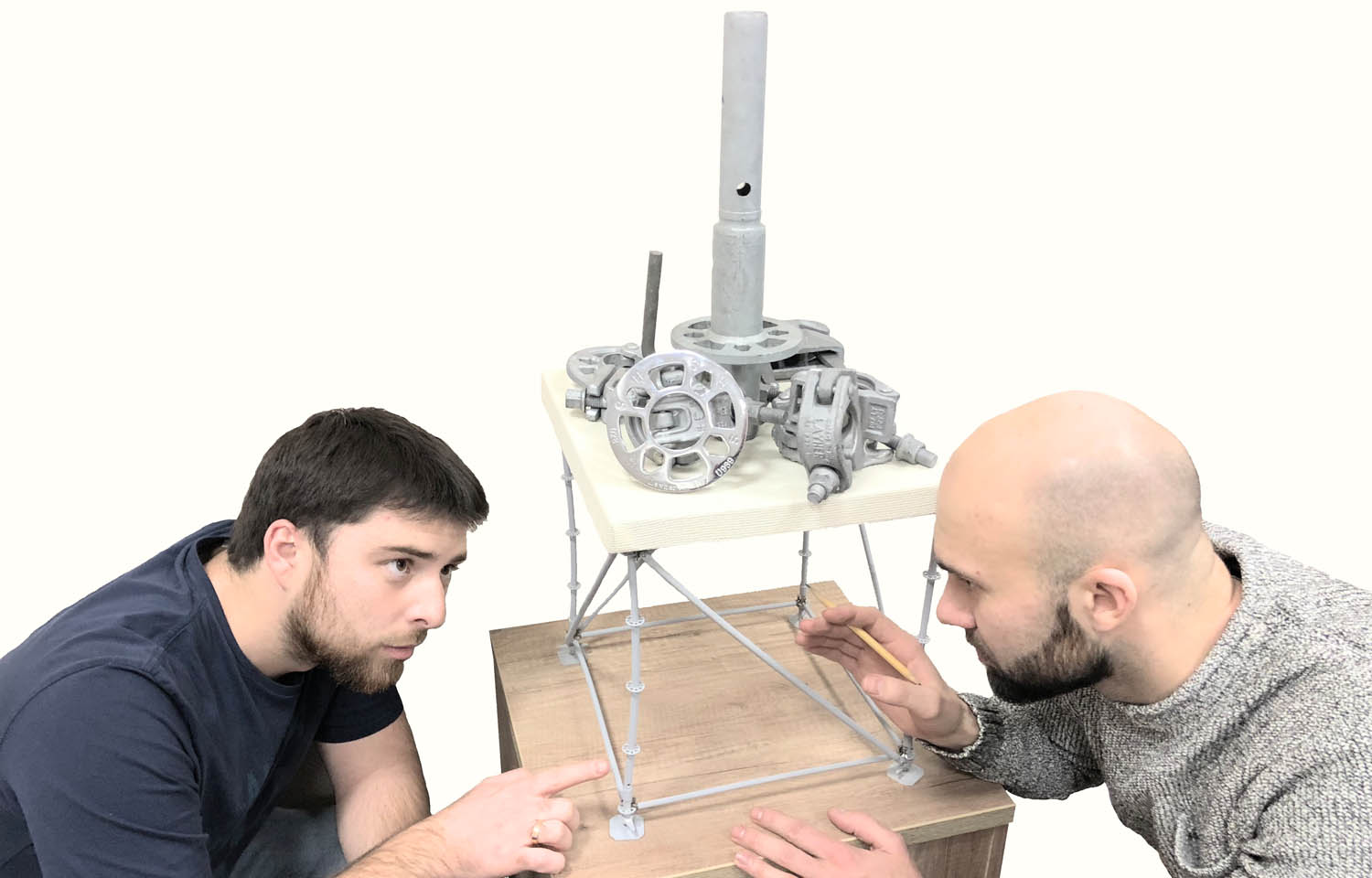
This BabyScaff mock-up provides an opportunity to empirically verify the stability, rigidity and load-bearing capacity of the ringlocks and coupler scaffolding structure without the need for special calculations and field tests of real scaffolding.
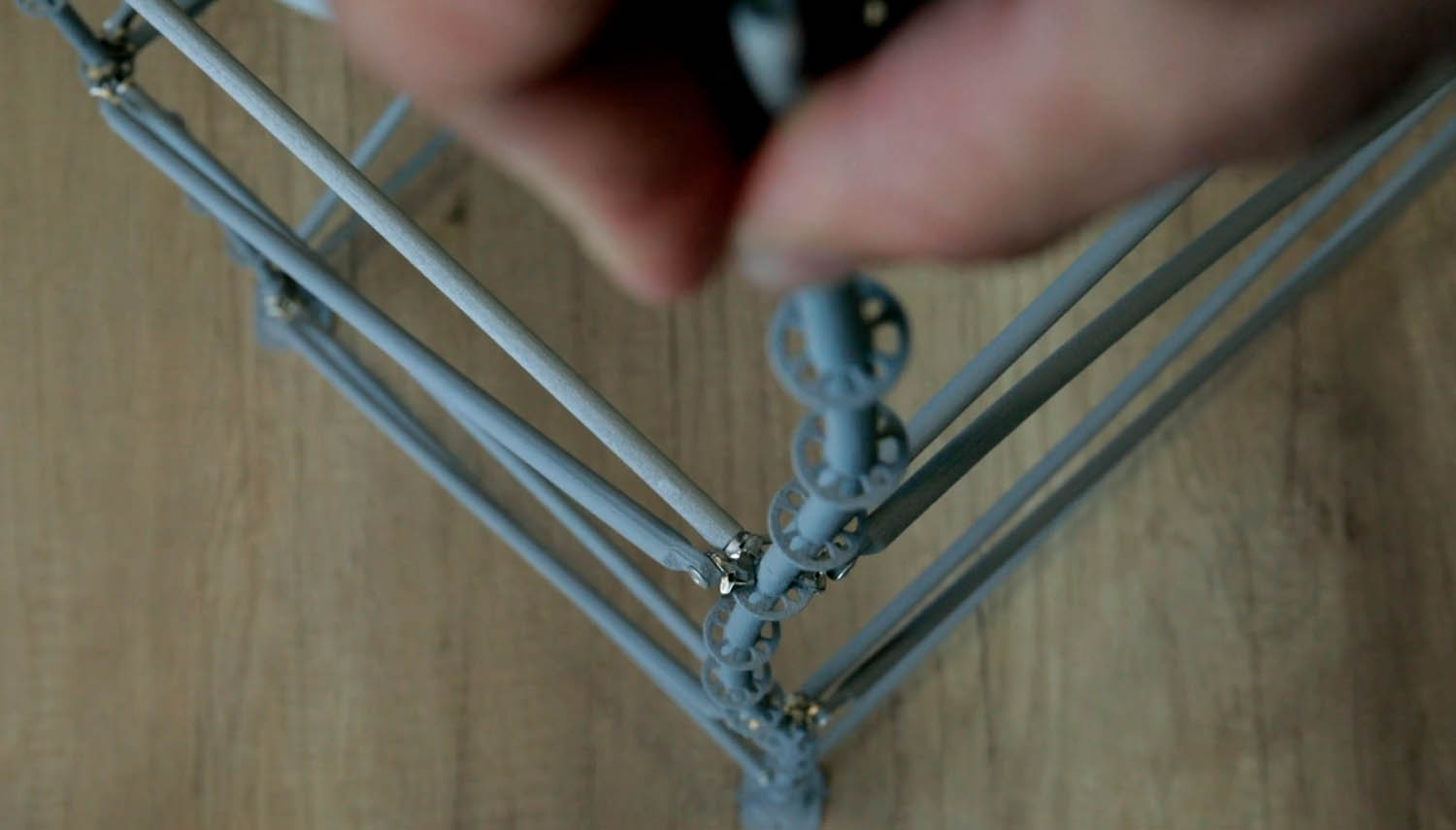
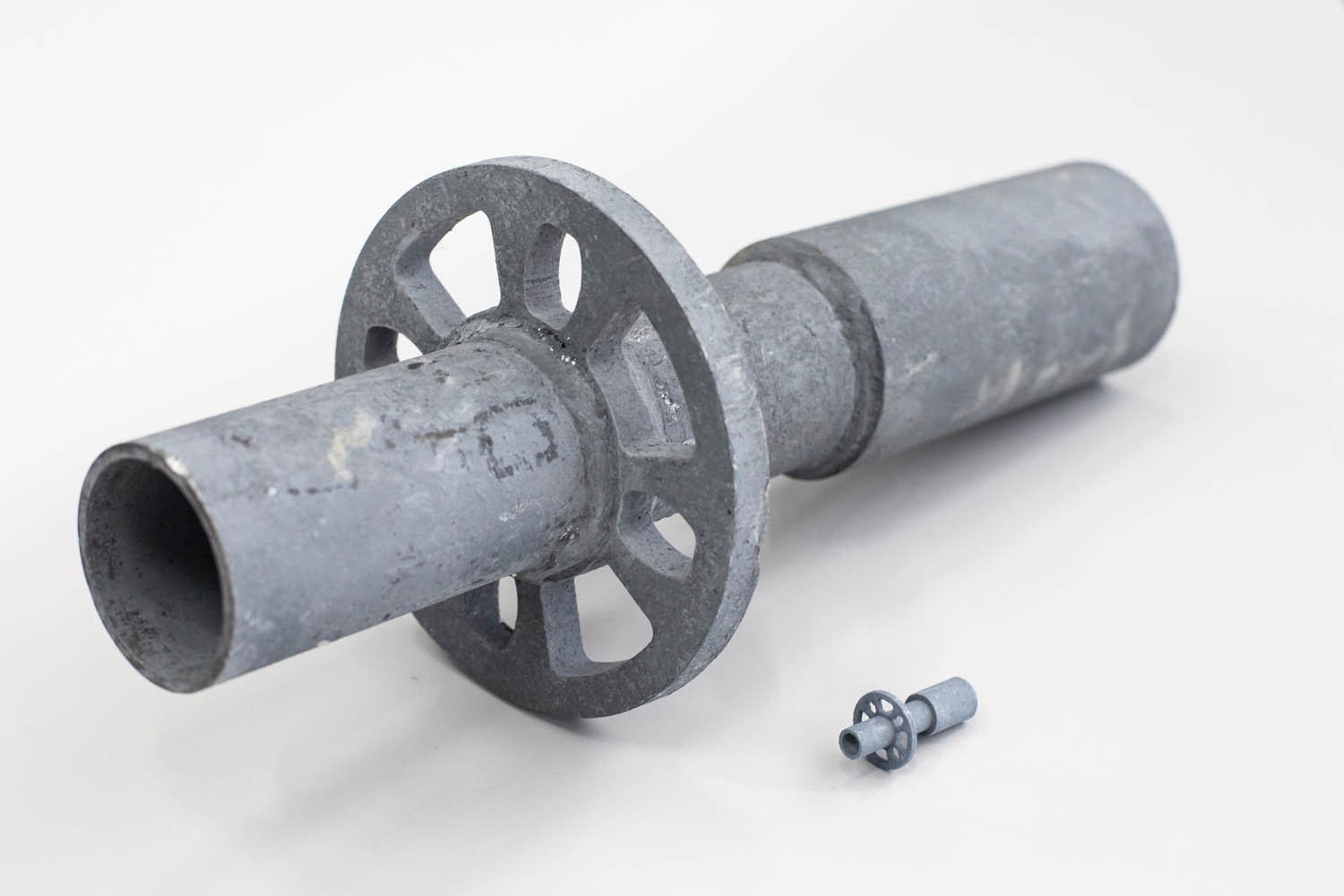
The mock-up is a 1:7 scaled-down replica of real scaffolding. The bearing capacity and material properties of the elements correspond proportionally to the bearing capacity and material properties of the actual scaffolding. The mock-up is made of polyamide with molded parts in cupronickel or steel. The plastic elements are made by 3D printing followed by milling and drilling to give the necessary rigidity and load-bearing capacity.
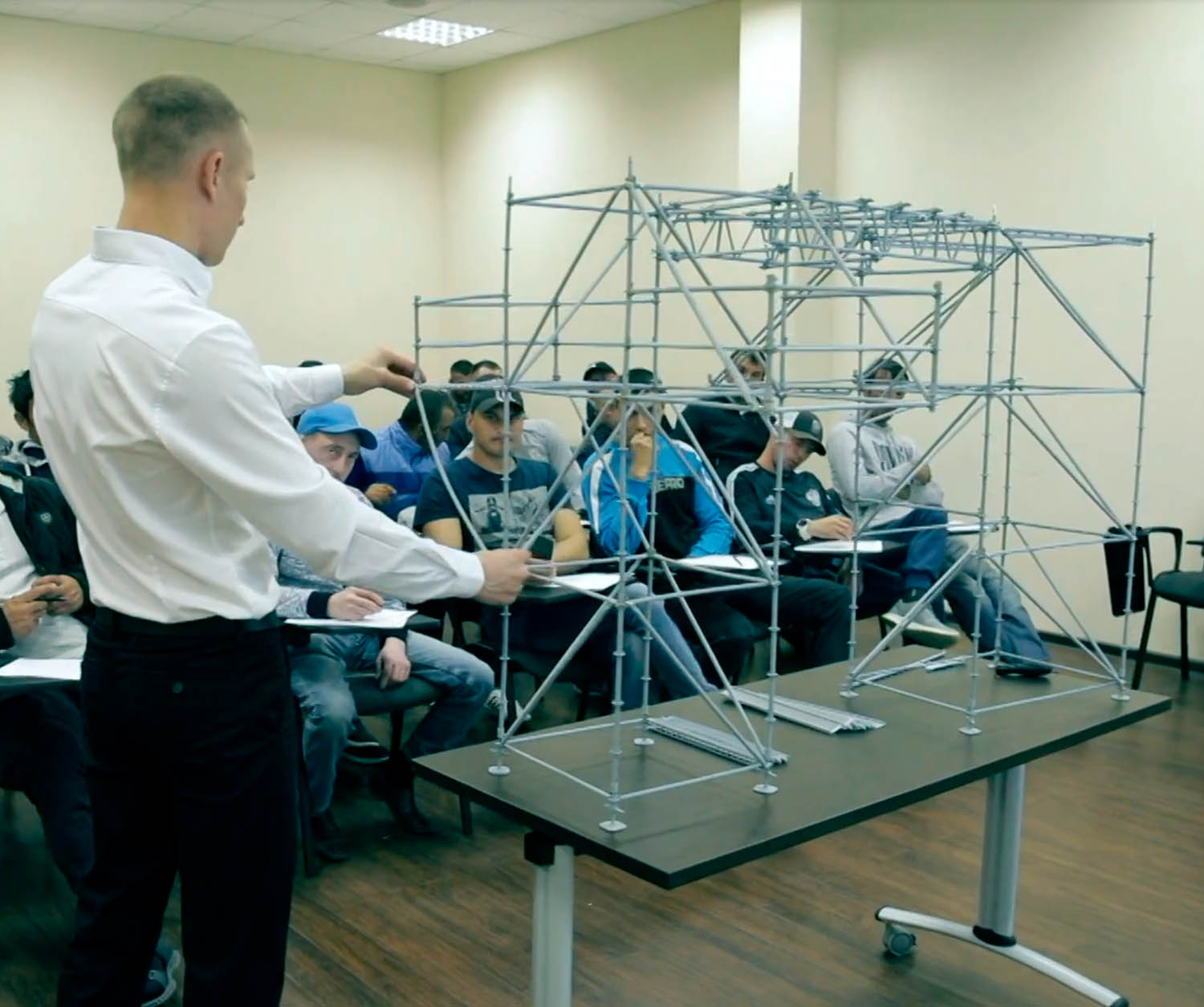
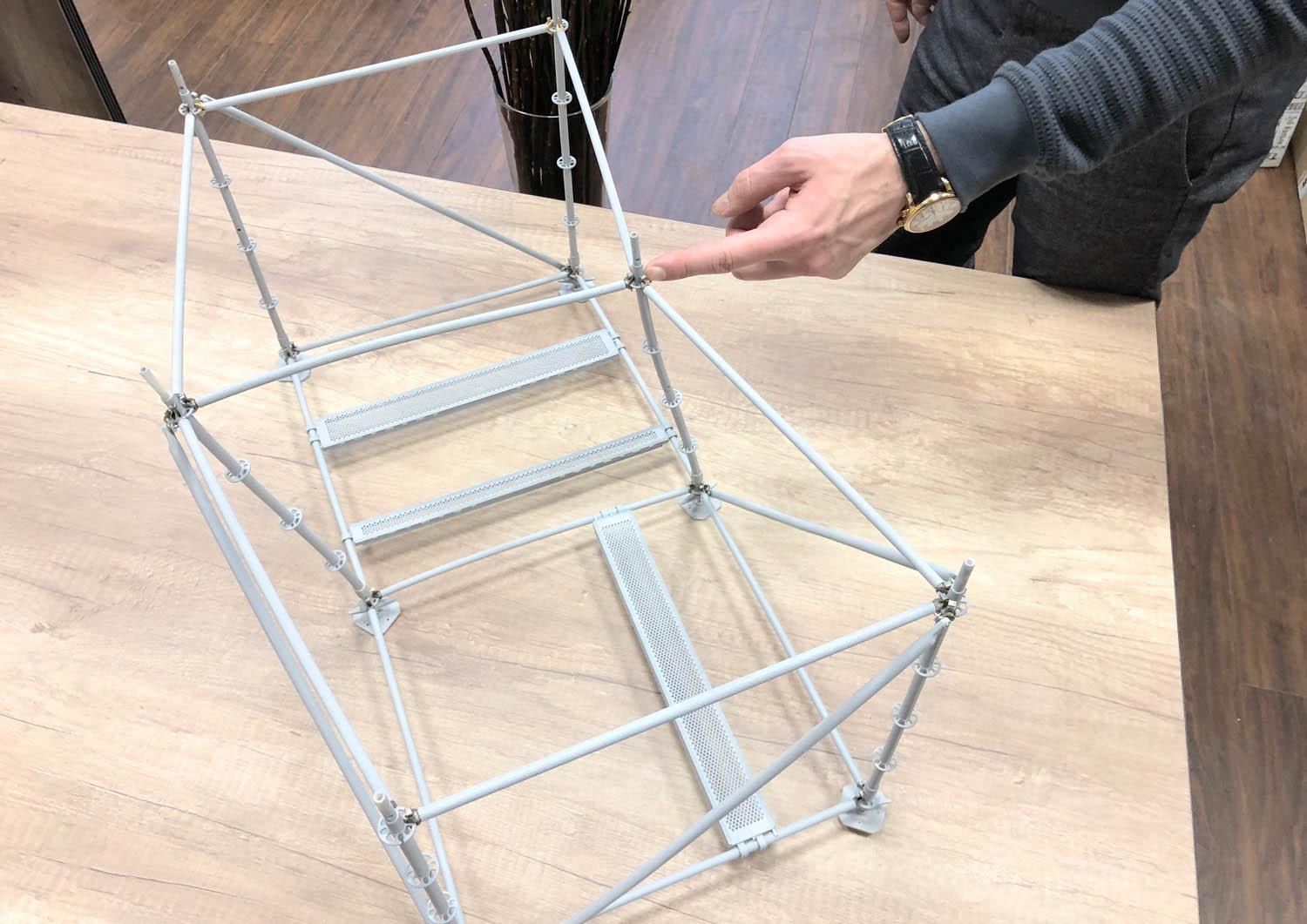
BabyScaff mock-up consists of a set of elements, each of which corresponds to its prototype in real scaffolding and fulfils a specific role in the construction. The mock-up consists of poles, horizontal elements (ledgers), longitudinal and transverse diagonal braces, adjustable supports (jacks), base collars, decks, flashing, planking boards, entry ladders, lattice girders, as well as connecting elements in the form of wedges and couplers. The elements in this set can have different dimensions and cross-sectional shapes. It should be noted that the set is not limited to the listed elements and can be supplemented with other elements necessary later for the needs of scaffolding properties testing.
By testing the properties of scaffolding on the BabyScaff mock-up, it is possible to increase the safety of scaffolding design and to reduce the costs required to calculate its stability, rigidity and load-bearing capacity and to carry out in-situ scaffolding tests.
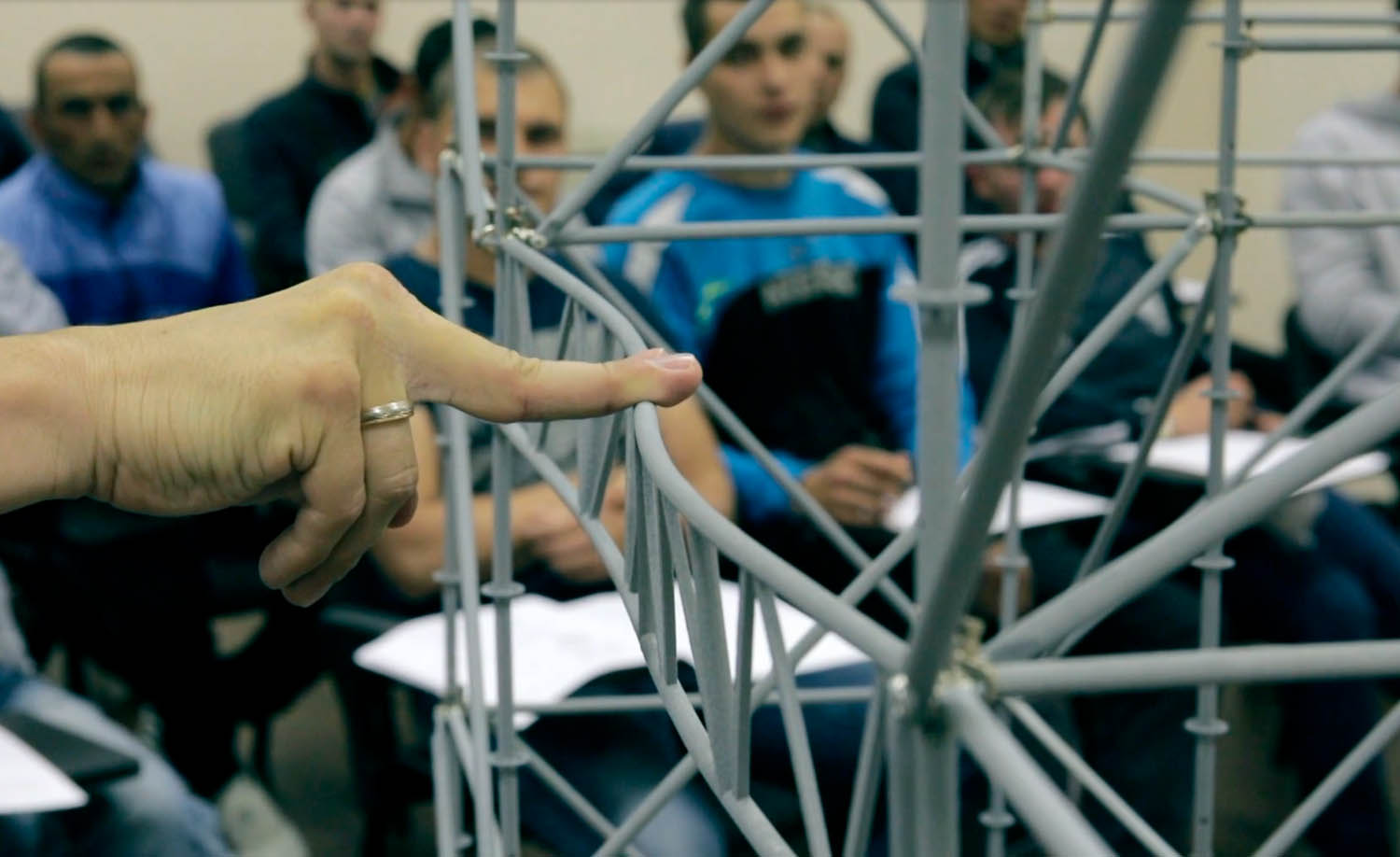
It is also worth mentioning the importance of using the BabyScaff mock-up for training purposes as a visual aid during scaffolding training. Incorrect assembly of scaffolding can lead to such hazards as overturning of the structure, destruction of the structure or individual elements of the scaffolding when permissible loads are exceeded, low rigidity of parts of the structure and the structure as a whole, and others. Learning how to erect scaffolding on the BabyScaff mock-up not only allows trainees to develop an understanding of what mistakes can be made and what they can lead to, but also to learn how to anticipate them.

Our expert will contact you soon